

Oocyte vitrification

Preserve your fertility and decide when to become a mother

Motherhood is a personal journey, and it is not always the right time to take the plunge. Oocyte vitrification is a technique that allows you to freeze your eggs at the best moment (biologically speaking) to use them in the future. In this way we preserve your fertility from the passage of time and from some processes/treatments that can be detrimental to your oocyte reserve and quality.

In what situations would it be recommended to vitrify your eggs?

  • If you do not have a clear desire to become a mother but do not rule it out
  • Before any ovarian surgery
  • Diagnosis of endometriosis affecting your healthy ovarian tissue
  • Family history of early menopause
  • Before receiving gonadotoxic treatment for a neoplastic process or other type of disease.


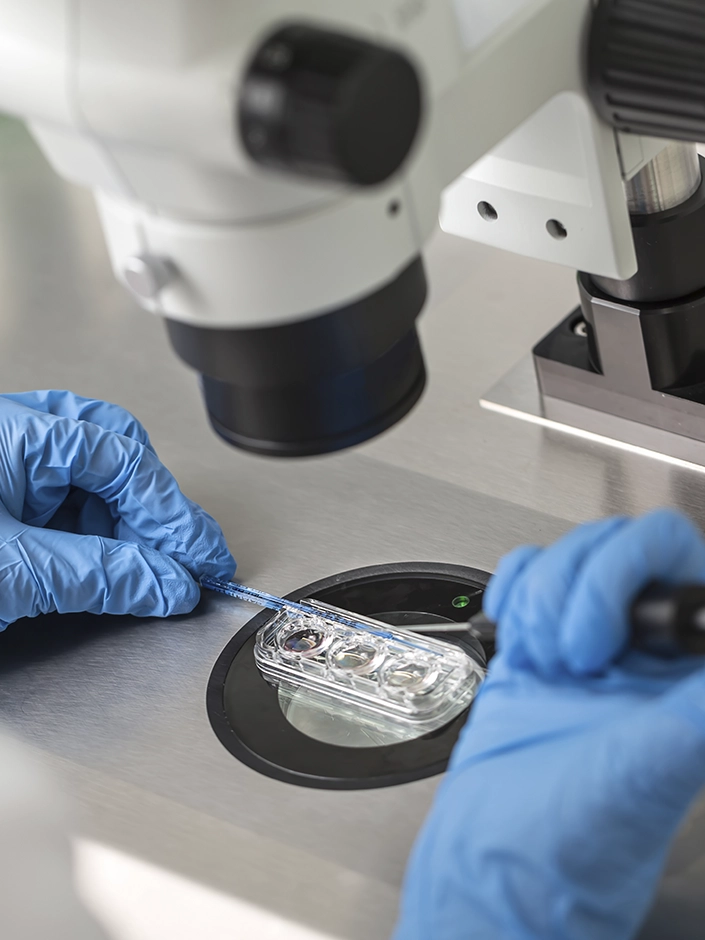
Oocyte vitrification consists of extracting the oocytes from the ovary and subjecting them to an ultra-rapid freezing process. This technique avoids the formation of ice crystals and preserves the characteristics of the oocytes intact for years.

Thanks to this advanced technique, the eggs can be kept in storage until the woman decides to use them in the future to attempt a pregnancy through assisted reproduction techniques.

The future in your hands

With oocyte vitrification, you can plan your maternity with greater freedom, without worrying about the impact of time on your fertility. In our clinic, we accompany you with a close treatment and a personalized follow-up at each stage of the process, so that you can make this decision with security and confidence.

vitrification of oocytes

Oocyte Vitrification Success Rate

The success rate of oocyte vitrification depends on the age and ovarian reserve of each woman at the time of freezing. The number of eggs that are successfully vitrified is a determining factor for the future. All scientific works published on this subject recommend the vitrification of a minimum of 12-15 oocytes. The older the woman is, the more eggs are needed.

In the future, when these eggs must be devitrified in order to be inseminated with the sperm, the pregnancy rate will also depend on the quality of the sperm. If the sperm is of normal quality (either from a donor or a heterosexual couple), the success rate will be related to the age at which the woman froze her eggs.


Women from <35 years old:

How does egg vitrification work?

This procedure consists of extracting and freezing the eggs using an ultra-fast cryopreservation technique, which avoids the formation of crystals and keeps their properties intact.

Step by step: Your vitrification treatment

How does egg vitrification work?

Before starting, we perform an evaluation of your ovarian reserve through hormonal analysis and ultrasound. With this information, we personalize the treatment according to your situation.

For approximately 10-12 days, hormones are administered to stimulate the ovaries and encourage the development of multiple follicles. During this period, we perform ultrasound and analytical controls to ensure that the response is adequate.

When the follicles reach the ideal size, we schedule the ovarian puncture. This procedure is performed under light sedation, lasts about 15 minutes and allows the oocytes to be extracted painlessly in an outpatient surgery.

The eggs obtained are analyzed and the best quality ones are vitrified by ultra-rapid freezing. They are stored in liquid nitrogen at -196°C, preserving their reproductive potential until you decide to use them.

When the time comes to become a mother, the eggs will be thawed and fertilized in the laboratory with your partner’s sperm or donor sperm. The embryos generated will be transferred to your uterus at the most appropriate time to promote pregnancy.

For whom is egg vitrification indicated?

  • Women who wish to delay childbearing without losing oocyte quality.

  • Patients with low ovarian reserve or who must undergo ovarian surgery.

  • Women who must undergo medical treatments that may affect fertility, such as chemotherapy.

  • Individuals seeking to preserve their fertility prior to gender transition.

parents with bebe

Fertility experts

Dr. Iñaki González Foruria

Dr. Iñaki González-Foruria

Medical Director

Dr. Iñaki González-Foruria is a gynecologist specialized in reproductive medicine with a solid scientific background and a practice focused on scientific rigor and personalized attention to his patients.


claudia forteza - vitrification of oocytes

Dr. Clàudia Forteza Rosich

Medical team

Dr. Clàudia Forteza Rosich is a fertility specialist gynecologist with a solid professional career focused on women's integral health.

Dr. Raffaele Rosania

Dr. Raffaele Rosania

Medical team

Dr. Raffaele Rosania is a gynecologist specializing in assisted reproduction with a career focused on comprehensive women's health care and specialized care for transgender people.

Dr. Rebeca Beguería

Dr. Rebeca Beguería

Deputy Medical Director

Dr. Rebeca Beguería is a gynecologist specialized in reproductive health and reproductive medicine with a solid background and extensive clinical experience.

Dr. Véronique Moens

Dr. Véronique Moens

Medical team

Dr. Véronique Moens is a gynecologist specializing in assisted reproduction with an international linguistic profile.

blivfclinic-contact

Book your appointment